
Monterey County Sex Offender Checks
The official county-level public route is the California Megan's Law Website, which the California Department of Justice manages. Monterey County does not operate a separate public registry that replaces it. The Sheriff's Administrative Services page points readers to the Attorney General's database, while city police and sheriff personnel handle registration questions for the places under their jurisdiction.
DOJ states that local law-enforcement information updates the public website daily. That does not make every entry complete at every moment. A move, a local update, or a correction may still be in transit. The required disclaimer also explains that mistaken identity can result from relying only on a name, age, or address. Compare the photo, aliases, physical description, posting category, offense, and status before drawing a conclusion.
California Registry for Monterey County
The California Megan's Law Website is the starting point for a Monterey County registry search. It first presents terms of use that must be accepted. Only information authorized for public disclosure under California law appears after that gate.
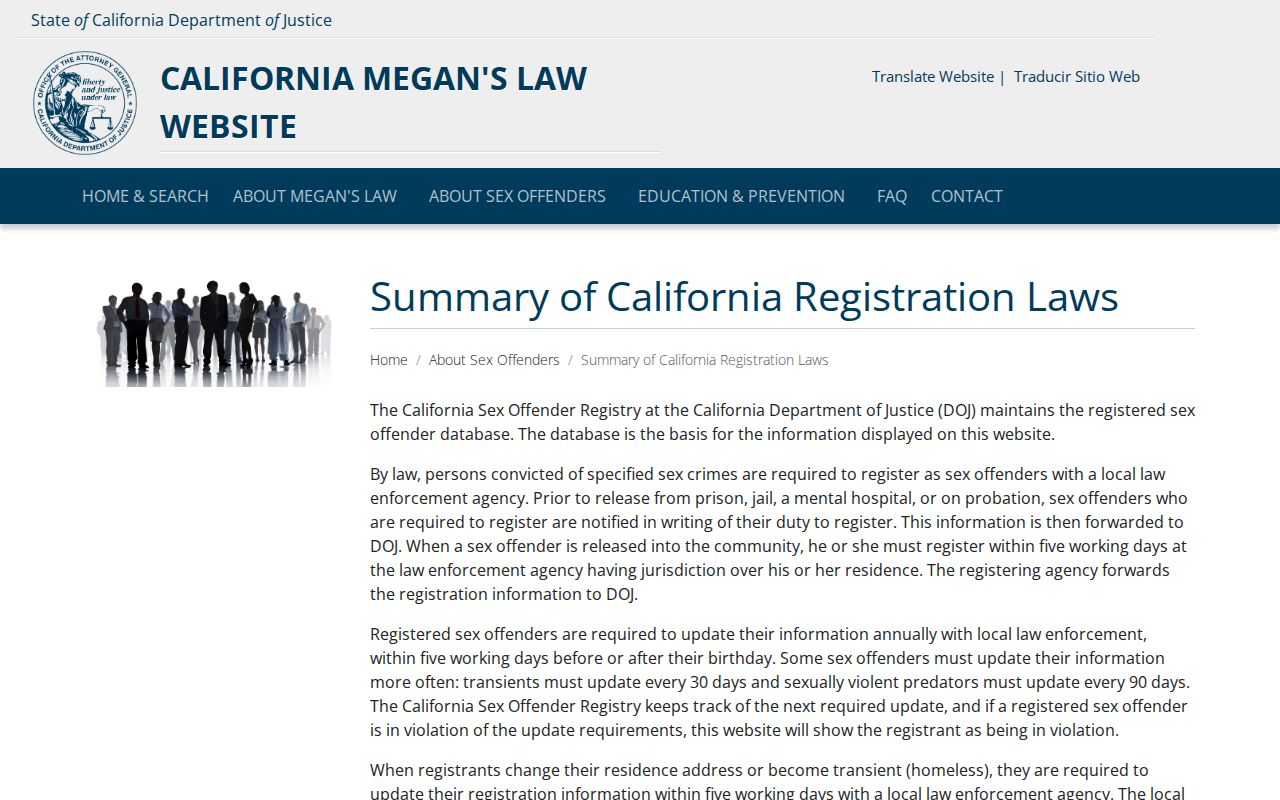
The state interface matters because it sets both the search route and the limits. Some people who must register do not have a public profile, and non-registerable offenses cannot be displayed on this registry.
California Megan's Law Website Searches
Searchers can move from a broad Monterey County view to a name or place-based result. Avoid using a common name alone. A mapped area or city filter can support community awareness, while a name search should be checked against multiple profile details.
- Open the state website, read its disclaimer, and accept the conditions before using search functions.
- Choose a name search or a location path using an address, city, ZIP code, county, or map.
- Review the result list and compare more than one identifier to reduce mistaken identity.
- Open the profile, note its public posting category and update status, and confirm a concern with the responsible local agency.
| Field Label | Type | Required | Notes |
|---|---|---|---|
| Disclaimer acceptance | Checkbox / continue | Yes | Required before search access. |
| Name | Text | No | First and last name path. |
| Address / radius | Address fields / map | No | Supports location searching; confirm the live radius options. |
| City | Text or selection | No | Use Salinas, Seaside, Monterey, or another county city. |
| ZIP Code | Text | No | Searches a ZIP-level area. |
| County | Selection / map | No | Select Monterey County. |
Hidden Monterey County Registrants
A missing result does not prove that a person has no California registration duty. State law controls who appears and at what address detail. DOJ says some registered offenders are not subject to public disclosure. The public registry also cannot display crimes that did not create the registration requirement.
Four posting categories explain much of the difference. A home-address category publishes the residence for specified convictions. A ZIP category publishes ZIP code, city, and county but not the home address. Conditional home-address rules can move a person from ZIP disclosure to home-address disclosure after another registrable offense. A non-displayed registrant remains registered locally but does not appear in the public search. Local law enforcement, not a searcher's inference, is the proper channel for a compliance concern.
Registry Profiles: What They Show
A public Monterey County profile is designed to identify the right person and explain the registration basis that may lawfully be disclosed. Field availability varies by category, so readers should not assume every profile has the same level of detail.
| Name and aliases | The public identity and known alternate names. |
|---|---|
| Photo and description | A photo when available, sex, physical descriptors, and possibly scars, marks, or tattoos. |
| Address category | Full home address, city/ZIP/county, conditional display, or no public listing under the statute. |
| Registerable offense | The offense or offenses that require registration; unrelated offenses may not be shown. |
| Status | Compliance information, including a violation when update duties are not met. |
| Other allowed fields | Vehicle, school, or other details may appear only where the law permits. |
Profiles can change quickly. DOJ's own warning makes a second-source identity check prudent, but the second source should be an official police or sheriff contact, not a people-search site. Registry information serves safety awareness, not rumor or confrontation.
Monterey County Registration Deadlines
After release into the community, a registrant must register within five working days with the law-enforcement agency that has jurisdiction over the residence. A residence change or move into or out of transient status also requires an update within five working days. The local agency sends that material to DOJ, which updates the website daily from the reports it receives.
Annual registration occurs within five working days before or after the person's birthday. Transient registrants update every 30 days, while sexually violent predators update every 90 days. Those clocks explain why the responsible Monterey County police department or Sheriff's Office is the best place to report suspected noncompliance. The public search itself does not replace the local verification process.
The DOJ summary of California registration laws lays out these update duties and posting rules.
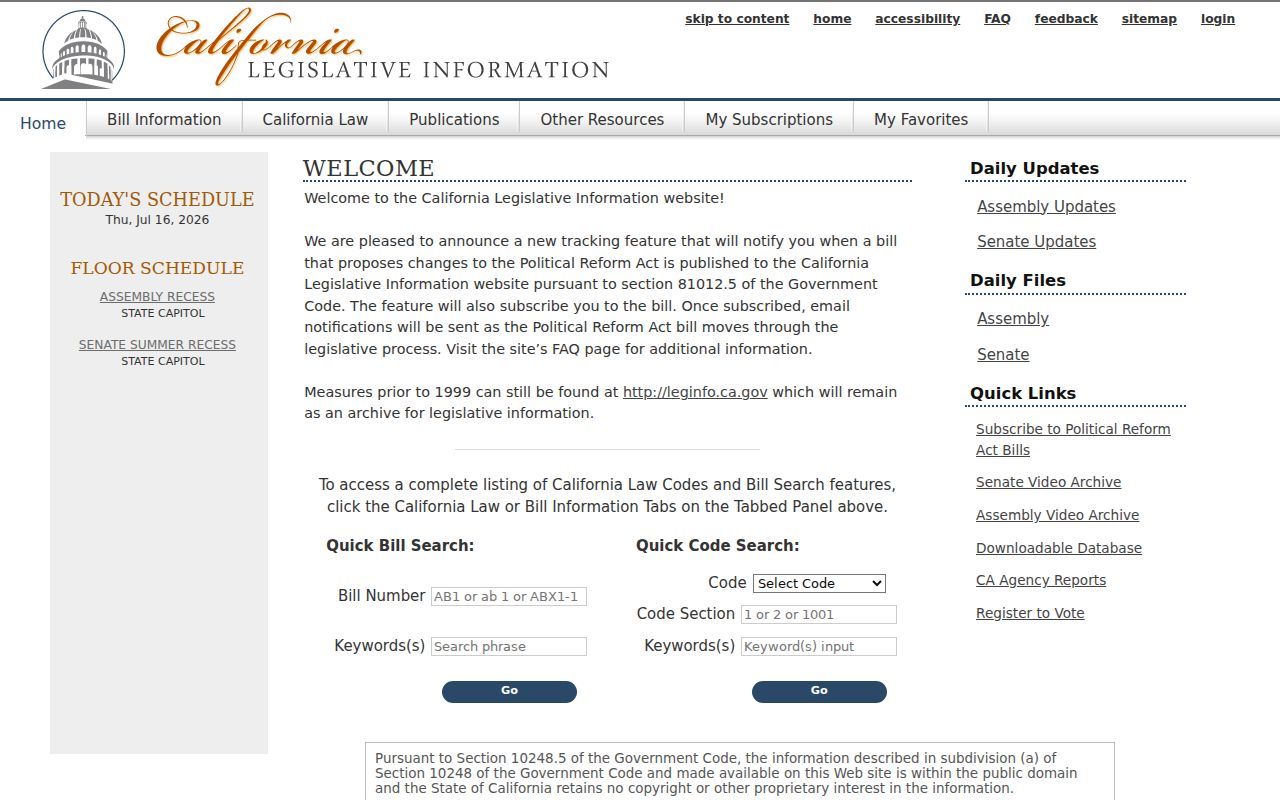
The source helps separate a registration deadline from public display. A person may owe a local update even when the public website shows only limited address detail.
Registration Levels and Duties in California
For the public Monterey County lookup, posting category is more useful than inventing a simple risk level. The researched DOJ material supplies different public-display categories and update schedules, not a county-assigned public ranking. The table below keeps those concepts separate.
| Category or duty | Timing or display | Meaning |
|---|---|---|
| Home address category | Home address displayed | Applies to specified convictions. |
| ZIP Code category | City, ZIP, and county displayed | The exact home address is not public. |
| Conditional home address | Home address may become public | Statutory conditions apply after another registrable offense. |
| Non-displayed | No public profile | Local registration duties still apply. |
| Annual update | Within five working days of birthday | Standard recurring update duty. |
| Transient / SVP update | Every 30 / 90 days | More frequent local reporting schedules. |
This distinction prevents a common error. Public visibility is not the same as whether someone must register, and update frequency is not a label a neighbor should use to judge risk.
National Searches Beyond Monterey County
A California-only search can miss an entry held by another state, territory, tribe, or federal jurisdiction. The National Sex Offender Public Website adds a cross-jurisdiction layer. It does not replace California's profile rules or the Monterey County agency responsible for local updates.
The official NSOPW search supports name and place searches across participating public registries.
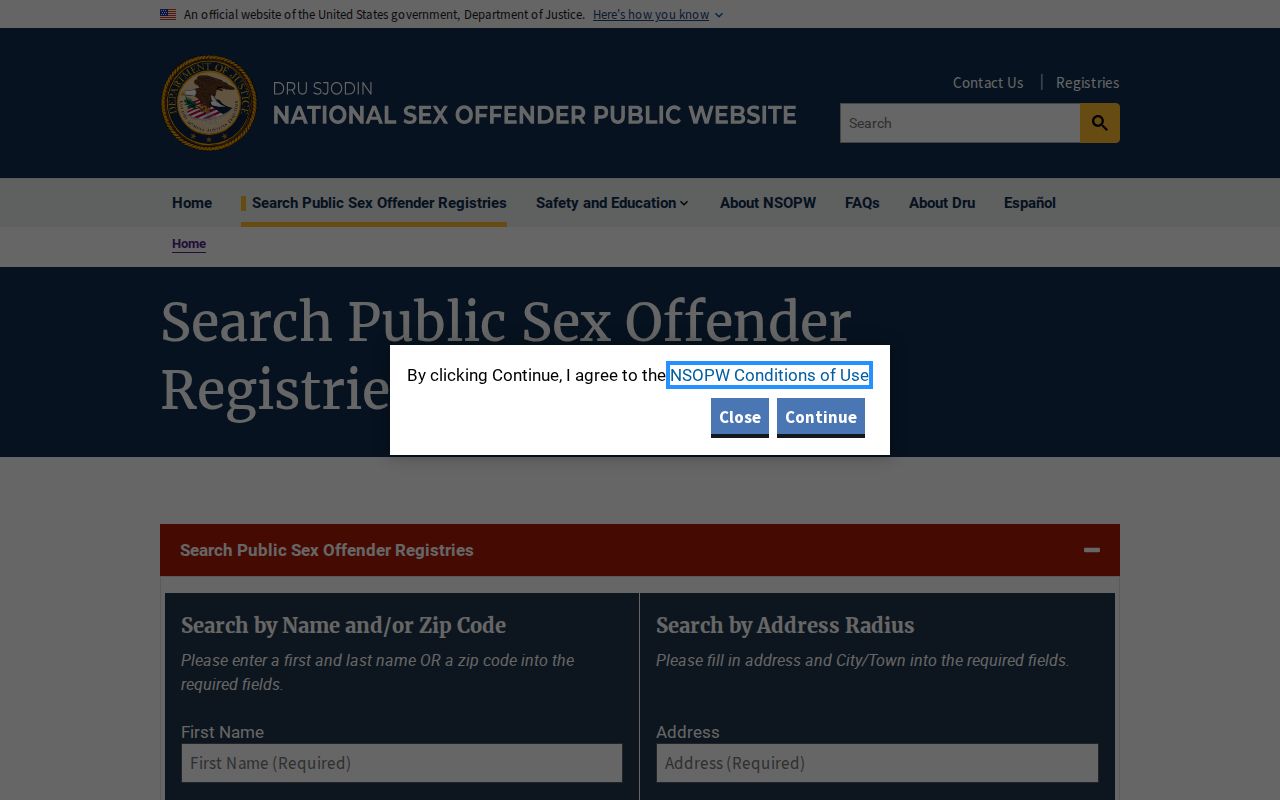
Use NSOPW when a person may have lived elsewhere or when awareness must cross the California line. Return to the originating registry for the current profile and correction process.
Correcting Monterey County Registry Errors
Do not confront the person named in a profile. First compare the photo, aliases, physical details, location category, and registerable offense. If information still appears wrong, report the issue to the police or sheriff's department responsible for the registration or email MegansLaw@doj.ca.gov. A clear report should identify the specific field at issue without circulating the profile more widely.
This route also fits a stale address or suspected failure to update. Local agencies verify registrations and forward changes. DOJ controls the statewide public display. The division of work means a Monterey County agency may need to confirm the source data before DOJ can correct the website.
Using Registry Information Lawfully
The California registry exists to protect the public and support informed safety planning. It is not permission to threaten, follow, shame, or organize action against a registrant or household. Information can be incomplete or change quickly, and a mistaken match can harm an uninvolved person.
Misuse is unlawful: Penal Code section 290.46(j) warns that using registry information to commit a crime or harass a registrant or family may bring criminal prosecution and civil liability.
The state disclaimer also says a person required to register who accesses search functions may face penalties under Penal Code section 290.46(i), including a fine up to $1,000, county jail up to six months, or both. Community awareness should stay factual, calm, and tied to official sources. For an immediate danger, contact emergency services instead of using a registry profile as an investigative tool.